Cart
0
Two silver chains can look equally sturdy in a photo and behave very differently in your hands. One gathers into a loose pile when you set it down. Another drapes smoothly around your neck but can develop a lasting kink if it gets folded and pressed at the wrong angle.
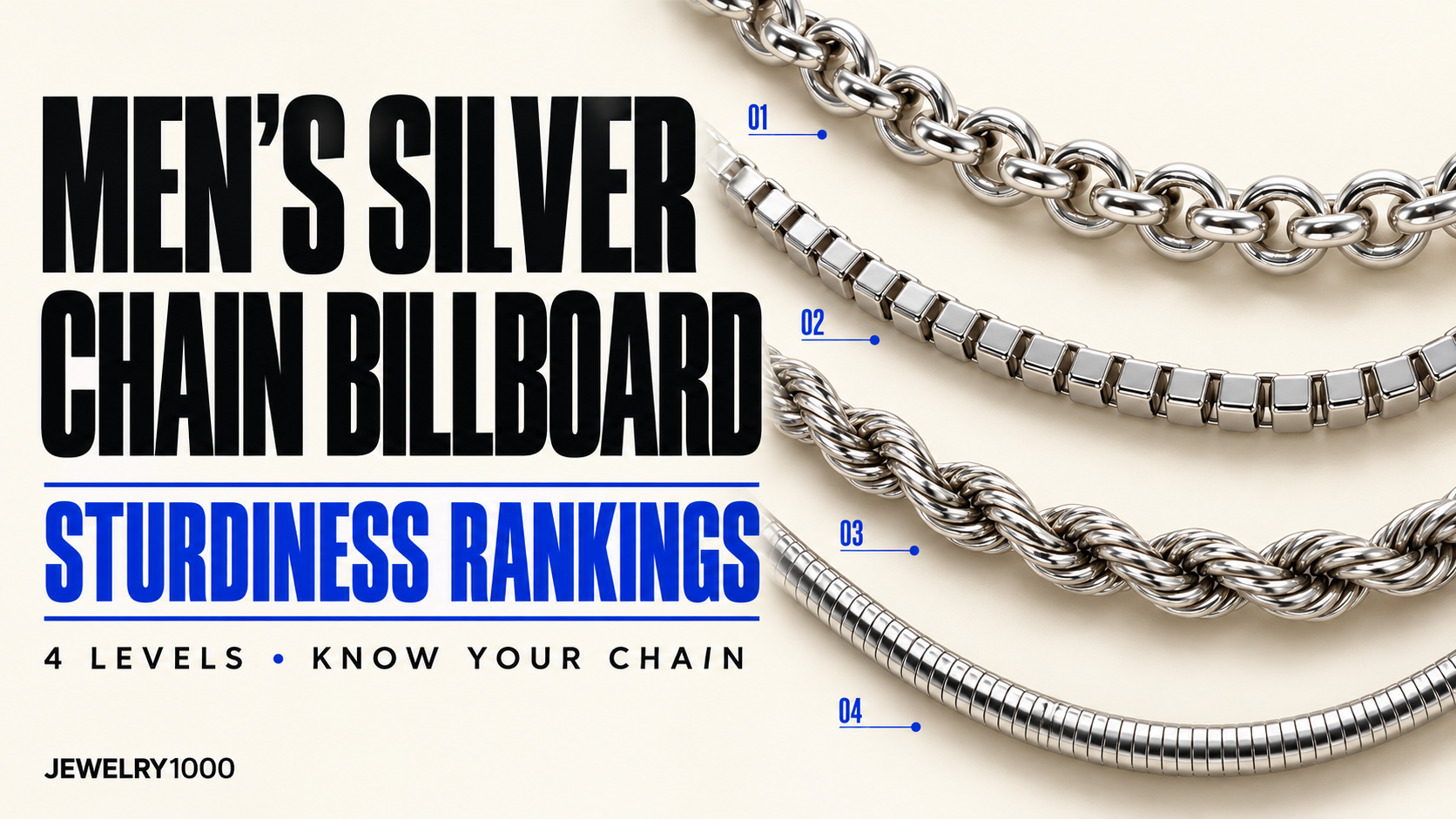
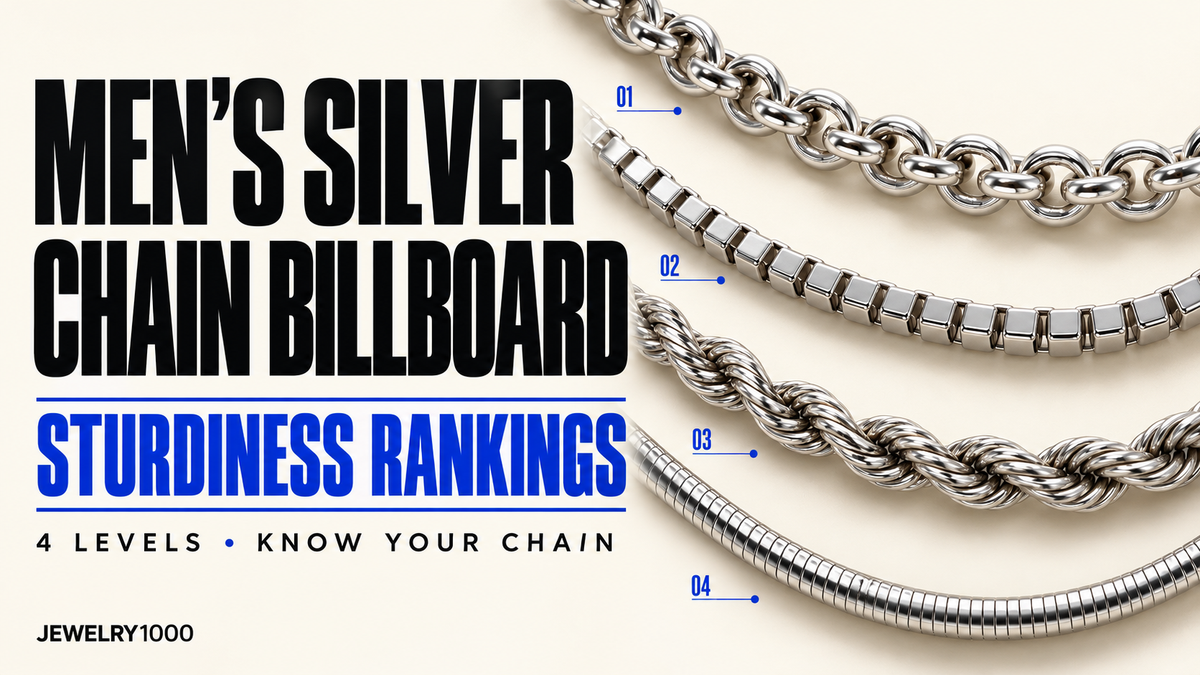
Over the past year running Jewelry1000, we’ve handled a wide variety of men’s silver chains and seen how much their construction affects the care they need. We put together this four-level sturdiness chart to help you understand those differences before choosing a chain.
Here, sturdiness means resistance to permanent bends, kinks, and deformation. The rankings are based on the particular chain constructions we carry and have handled. Chains with the same style name can vary in thickness, spacing, and how they are made.
A lower ranking doesn’t make a chain a poor choice. You might prefer the smooth finish of a snake chain and be happy to take it off before bed. The aim is to help you choose a design you enjoy—and know what to expect when wearing it.
Silver Chain Sturdiness at a Glance
The chart below groups chains by how well they tolerate bending and pressure. Styles within each level share a similar rating; their order does not indicate a difference in sturdiness.
|
Level |
Sturdiness |
Chain styles |
What to expect |
|
1 |
High |
Rolo, regular Cuban, anchor link, oval link, cable |
Links move freely, allowing the chain to fold and change direction with little resistance. |
|
2 |
Moderate |
Box, bead, Chopin, Byzantine, bar |
These chains allow normal movement, but forcing a sharp bend can strain their links or connectors. |
|
3 |
Lower |
Rope, tightly fitted Cuban, chevron |
These constructions need more care to avoid damage from sharp folds, twisting, or compression. |
|
4 |
Delicate |
Snake, wheat, Coreana |
A sharp fold under pressure can leave a lasting kink. Gentle handling and careful storage are particularly important. |
Why does a regular Cuban chain sit in Level 1 while a tightly fitted version falls into Level 3? The name alone doesn’t tell the whole story. The space between the links—and how much movement that space allows—makes a difference. Below, we explain what puts each chain in its group.
Level 1: High Sturdiness
Rolo, regular Cuban, anchor link, oval link, cable


These chains have one useful feature in common: their links have room to move. As the chain changes direction, each link can turn within the next instead of immediately pressing against it.
You can see this when you gently lower one onto a desk. It gathers into a loose pile, with the links settling wherever there’s space. That freedom of movement helps the chain fold without forcing the silver itself out of shape.
Rolo chains are a good example. Their rounded links move easily against one another. Anchor, oval link, and cable chains work in a similar way. The regular Cuban chains in this group have enough clearance between their links to remain flexible, even though they lie flatter against the skin.
In our experience, these are the most forgiving styles when it comes to everyday bending. They suit someone who wants a silver chain that doesn’t demand much thought each time they move or put it away.
They can still be damaged by a hard pull or enough pressure to crush a link. But for resistance to kinking, these freely moving constructions earn their place at the top of our chart.
Level 2: Moderate Sturdiness
Box, bead, Chopin, Byzantine, bar


These chains are flexible enough to follow the curve of your neck, but they have limits when folded sharply. Depending on the design, closely fitted links or fine connectors can come under strain once the chain runs out of room to move.
Box chains have sturdy square links, but those links sit close together. As you bend the chain, they begin to press against one another. Forcing it further can distort the individual boxes and leave a section that no longer moves or hangs as it should.
Bead chains have a different weak point. The beads themselves are sturdy, while the small connectors between them are much finer. These joints allow movement within a limited range; forcing a tight fold puts pressure on the connectors.
Chopin chains feel soft and flexible in the hand. The versions we carry use thicker hollow silver tubes in a comparatively loose weave, leaving room for the parts to shift as the chain bends. That helps them tolerate movement, although a hard fold or squeeze can still deform the tubing.
Byzantine chains have an intricate arrangement of interlocking links. Our versions move comfortably, but the clustered links can press against each other in a tight bend. Bar chains depend on the joints between their rigid sections for flexibility, so those connections need room to turn without being forced.
For everyday wear, these are practical choices with a little attention to handling. Let them follow their natural curve when putting them away, and avoid pushing them into a tight fold.
Level 3: Lower Sturdiness
Rope, tightly fitted Cuban, chevron


The chains in this group can hold up well during ordinary wear, but need more care when folded, twisted, or pressed. We place these particular constructions in Level 3 because they are less forgiving when pushed beyond their natural range of movement.
Rope chains sit near the boundary between Levels 2 and 3. They feel sturdy in many situations, and their twisted pattern holds its shape well. In the versions we’ve handled, however, a sharp fold can strain the small links within that pattern. We’ve placed them here because the risk of bending damage deserves attention, even if the chain feels substantial.
Tightly fitted Cuban chains show why link spacing matters. Compared with the regular Cuban chains in Level 1, their links have much less room to turn. Bend one far enough and the links push against each other; force it further, and the silver can deform. A thick, heavy appearance doesn’t necessarily mean the chain can tolerate a tight fold.
Chevron chains have closely interlocked sections that create a flat, sleek profile. They curve around the neck, but have less freedom to bend in other directions. In our experience, these versions are more forgiving than snake chains, though sharp sideways bends and twisting still need to be avoided.
Take these chains off before sleeping, when they could become trapped beneath your body and pressed into an awkward position. When storing them, lay them in a relaxed curve with enough space around them.
Level 4: Delicate
Snake, wheat, Coreana


A chain can feel soft as it moves through your fingers and still be vulnerable to a sharp bend. The constructions in this group drape comfortably, but a fold under pressure can leave a kink that doesn’t disappear when you straighten the chain.
Snake chains are a good example. Their closely fitted structure creates the smooth, continuous surface that makes them appealing. It also leaves little room for the individual parts to shift when the chain is folded sharply. If that fold gets pressed—beneath your body while sleeping, for instance—it can leave a visible bend or damage the chain.
Wheat chains, in the versions we carry, are tightly woven from fine silver wire. The intricate weave gives them a detailed texture, but it is also prone to kinking when forced into an awkward angle. This differs from our Chopin chains in Level 2, which use thicker hollow tubing in a looser weave. The wheat construction has less room for its parts to move before becoming distorted.
Coreana chains also need gentle handling. Their fine, closely arranged components create an attractive texture, but the versions we’ve handled are vulnerable to deformation from sharp folds and squeezing.
These designs may be exactly the look you want. A snake chain’s smooth finish, for example, has a very different appeal from an open-link rolo chain. Choosing it simply means allowing for a more careful routine.
Remove these chains before sleeping, and store them flat in a relaxed curve without other jewelry pressing on top. If you notice a kink, avoid pulling or repeatedly bending the spot to straighten it; have a jeweler assess it before further wear.
Choose a Chain That Suits Your Habits
If you want a chain that needs little fuss, start with Level 1. Rolo, regular Cuban, and the other freely moving link styles are forgiving choices for everyday wear. Level 2 offers more textures and structures, with a little extra attention to how you handle them.
But if a snake chain has the finish you’re looking for, a rolo chain probably won’t satisfy you just because it ranks higher. There’s nothing wrong with choosing a more delicate design when you know what care it needs. Taking it off before bed and giving it enough space in a jewelry box may be a routine you’re happy to follow.
Removing any chain before sleeping is a good habit, particularly for Levels 3 and 4. How you store it matters too: let it rest in a natural curve rather than folding it tightly or packing it beneath other pieces.
As you browse our men’s silver chains, use this chart alongside the product’s photos and specifications. If you’re unsure where a particular chain fits, ask us. We can explain its construction and help you decide whether it suits the way you plan to wear it.